
Recent updates to the Centers for Disease Control and Prevention (CDC) childhood vaccine schedule have raised questions for families. Dr. Michael Bigham, pediatric ICU physician, parent and chief quality officer at Akron Children’s, helps break it down.
All 17 childhood vaccines are still available, but the CDC now universally recommends 11 vaccines for all children, down from 17. The remaining six are now recommended primarily for children at higher risk. For families with standard-risk children, those vaccines are part of a shared decision-making conversation with their pediatrician.
Importantly, nothing has been taken away. Pediatricians will continue to stock all vaccines, and insurance is expected to cover them all, including Medicaid and private plans. Parents do not need to prove medical risk to access vaccines that are no longer universally recommended.
Some pediatricians have expressed concern that differences between CDC guidance and recommendations from other medical organizations could be confusing for families. At Akron Children’s, providers are focused on helping parents navigate the changes with clear, science-based information.
While the recommended vaccine schedule is designed to provide the strongest protection, families may ask about spacing vaccines out. That conversation should always happen with a provider, especially since research shows children on non-standard schedules are less likely to complete all recommended vaccines.
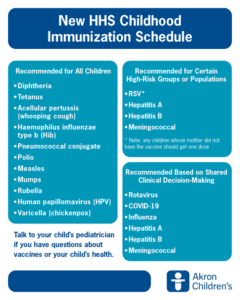
The timing of full implementation remains unclear, but for families, routine pediatric visits should look the same. Vaccines remain available, and pediatricians remain partners in protecting children’s health.
Bottom line: Parents should feel informed, empowered and supported. Asking questions and trusting credible medical guidance helps protect children, not just from illness, but from misinformation.